When most people think of Guatemalan specialty coffee, they picture Antigua’s valley ringed by volcanoes, or Huehuetenango’s remote highland farms at 2,000 meters. Those regions have decades of international recognition, roaster relationships, and shelf space in specialty shops across the world.
Nuevo Oriente has none of that history — and that’s exactly what makes it worth paying attention to.
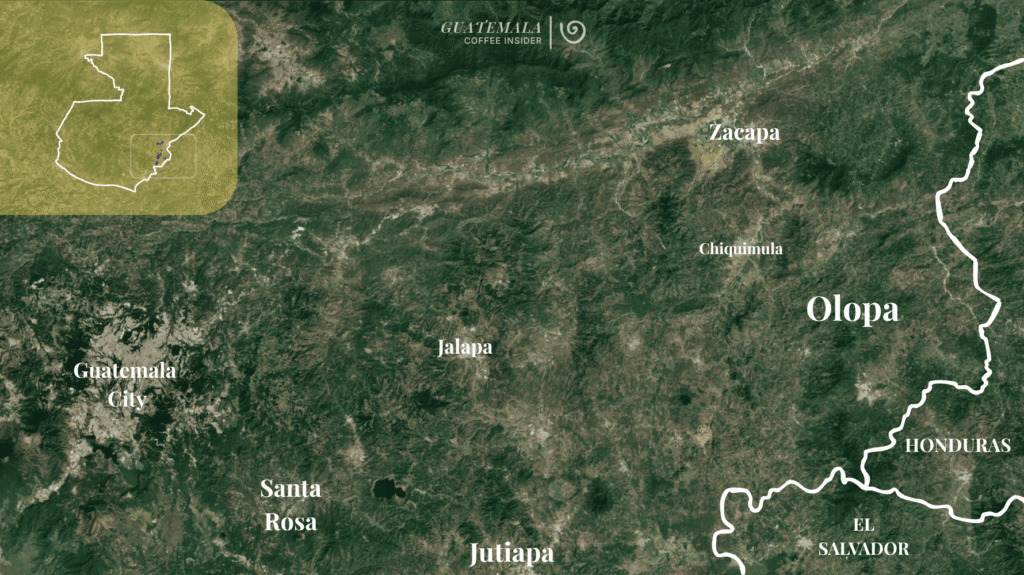
Nuevo Oriente is not a single town, city, or administrative department. It is a coffee-growing region encompassing parts of the eastern departments of Jutiapa, Jalapa, Chiquimula, and Zacapa. It sits near Guatemala’s border with Honduras and El Salvador, in a landscape that doesn’t fit the postcard image of Central American coffee country. No famous ruins, no tourist trail, no reputation that preceded it.
What it has instead are smallholder families who spent decades building something quietly — and a regional competition record that eventually forced the specialty coffee world to take notice.
A region that built its coffee identity from scratch
Eastern Guatemala developed outside the core centers of colonial coffee power. Many of today’s coffee-growing families in Nuevo Oriente arrived during the 20th century, drawn by available land and the possibility of long-term stability. Coffee took hold not because conditions were ideal, but because farmers adapted. Hillsides once used primarily for subsistence crops gradually incorporated coffee as a way to stabilize income and remain rooted in place.
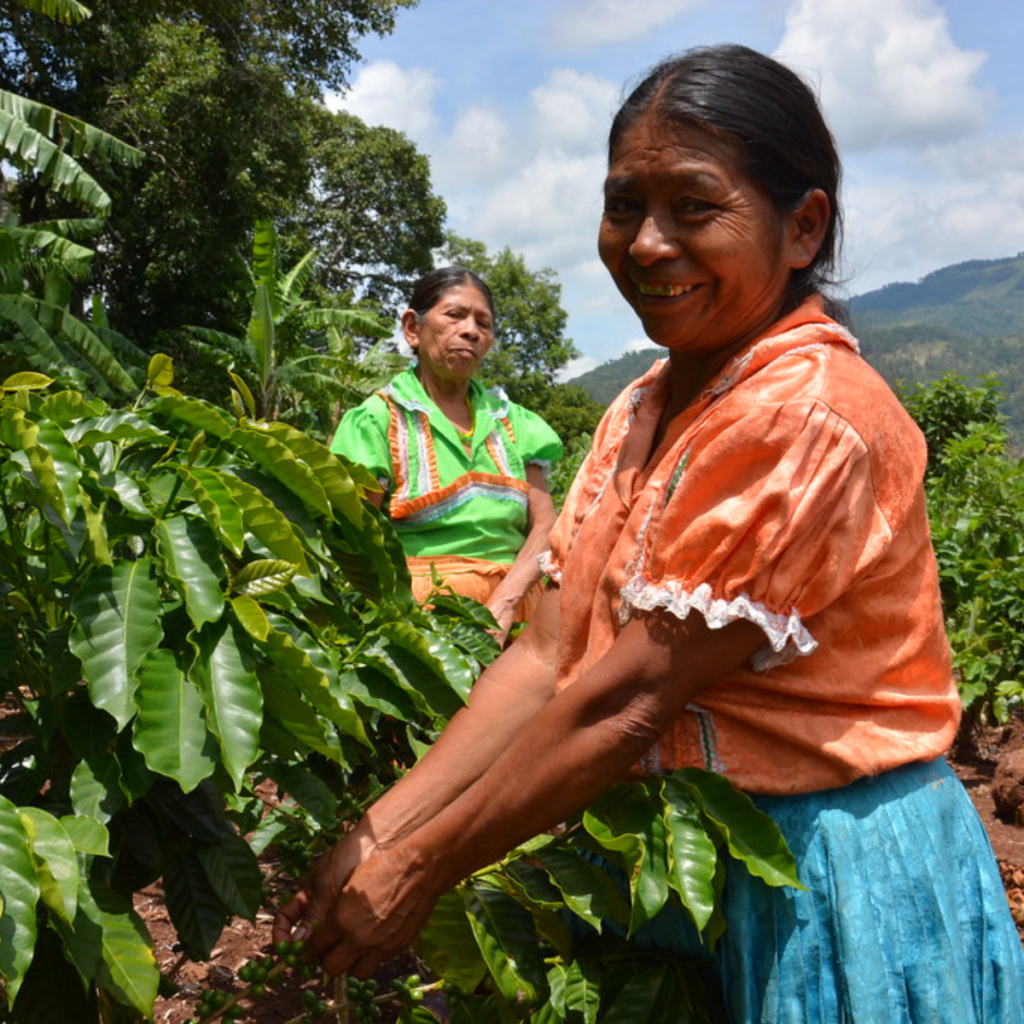
What was once one of the poorest and most isolated areas of Guatemala is now vibrant and growing. That transformation didn’t happen through outside investment or institutional backing. It happened through the accumulated decisions of hundreds of small producers who chose to improve their craft, year after year, harvest after harvest.
The New Oriente region in the eastern part of the country produces more volume than any other Guatemalan region, as well as some very fine coffees. That combination — high volume and emerging quality — is unusual. Most specialty regions sacrifice one for the other. Nuevo Oriente is learning to do both.
The geography that nobody expected to produce specialty coffee
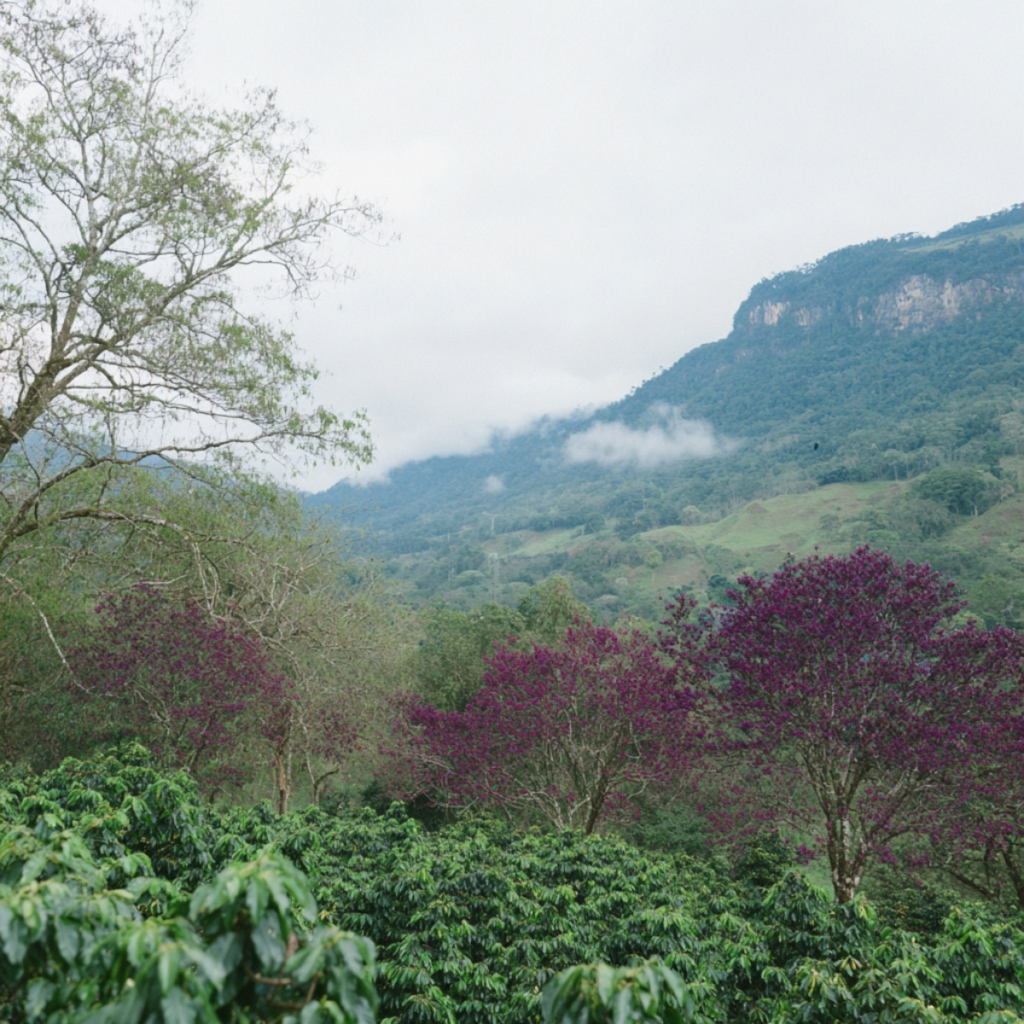
Nuevo Oriente is located near the country’s eastern border with Honduras, and the local climate is rainy and cloudy but with fairly stable temperatures. Coffees from this region are full-bodied, aromatic, and decidedly acidic, with beans being grown in the 4,300 to 5,500-foot range and at temperatures from 64-77° Fahrenheit.
Santa Rosa, within the Nuevo Oriente region, is located on a former volcanic range. Its soil is made of metamorphic rock: balanced in minerals and quite different from soils in regions which have seen volcanic activity since coffee was first planted. That geological distinction matters in the cup: metamorphic rock weathers differently than volcanic ash, releasing minerals slowly and producing a soil chemistry that favors clean, structured coffee over the explosive brightness of high-altitude western origins.

The volcanic soil and clay make things tougher for plants to grow and expand — but extremely mineral rich. This makes for an interesting, slow-growth plant. This slow growth tends to produce fewer coffee cherries, but makes them much richer in flavor.
Less volume per plant. More concentration per cherry. That’s the Nuevo Oriente trade-off — and for specialty coffee, it’s exactly the right one.
Smallholders as the engine of quality
Traditionally it was only small producers who grew coffee to supplement their other crops. But now, you can find bigger farms and easier access with better roads. The infrastructure has improved, but the soul of the region remains the same: family farms, often under five acres, where every decision in the harvest is made by the same hands that planted the trees.
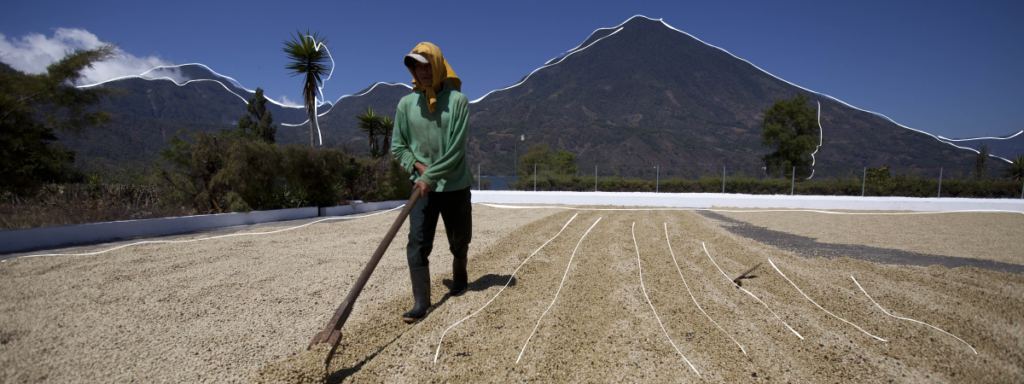
Guatemala Organic coffee farms in the Chiquimula area average only about 2 acres and are spread throughout the forests of the Sierra Las Minas and Monte Cristo mountain ranges. These areas claim excellent altitudes between 4,600 and 5,400 feet, generous natural water resources, and rich volcanic soil — a very ideal microclimate for specialty coffee. Natural shade canopy trees, such as inga, cedar, laurel, citrus and banana protect the smaller coffee shrubs while also providing nitrogen fixing in the soil.
This agroforestry approach — not a certification requirement, just the way it’s always been done — produces a coffee that carries its environment in the cup. The mineral richness of the soil, the slow cherry development under shade, the clean mountain water used in processing: all of it is there if you know how to look.
Olopa, Chiquimula — where Nuevo Oriente earned its specialty credentials
If there’s a single municipality that crystallizes what Nuevo Oriente has become, it’s Olopa.
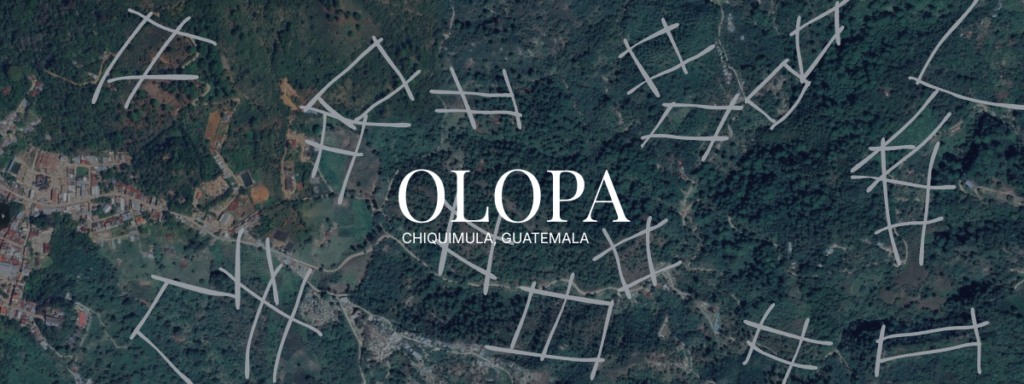
Olopa is a small municipality in Chiquimula, at the foot of the Sierra de las Minas, surrounded by hills where coffee has been grown for over 80 years. It’s not on the tourist trail. Most visitors to Guatemala pass through the department without stopping. But within the specialty coffee community, Olopa has a record that speaks clearly.
In 2005 began the history of APOLO — the Asociación de Productores de Olopa — a coffee producers’ association in Chiquimula that with its distinct flavors has won over consumers in markets across North America including the United States. APOLO, read backwards, spells Olopa — positioning the town that for many years has generated employment in the lower Ch’ortí area. For four consecutive years, APOLO won first place at the regional level as the best coffee of Region 7 in Anacafé’s regional competition.
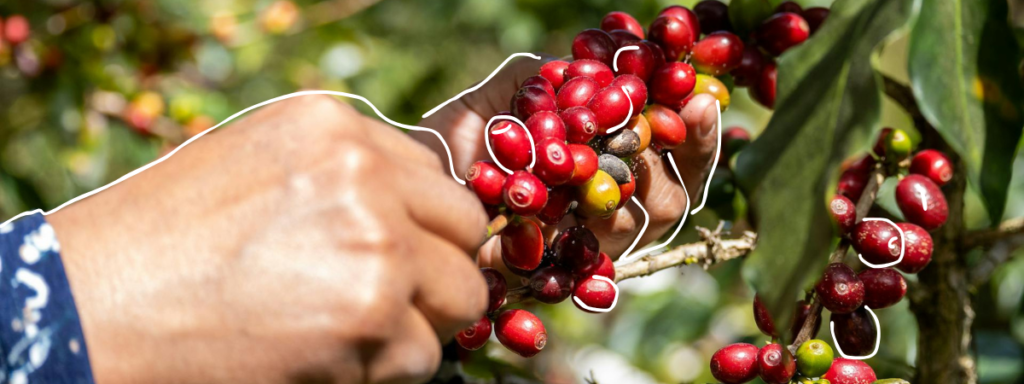
Four consecutive regional titles. In Anacafé’s competition framework — where every region’s producers compete to represent Guatemala’s specialty coffee identity — that’s not a coincidence. That’s a system working.
How Anacafé’s regional competitions changed everything for Nuevo Oriente producers
Anacafé has organized regional competitions with the objective of identifying and rewarding producers of differentiated coffees and promoting access to new markets that recognize the origin of high-quality coffees produced in the cafetalera zones of Jutiapa, Jalapa, and Santa Rosa.
For smallholders in Nuevo Oriente, these competitions did something more important than award prizes: they created a feedback loop. Winning required understanding what made your coffee score higher — fermentation time, harvest selection, drying precision. Producers who competed learned to taste their own coffee differently. They started asking questions their parents never had to ask.

One farmer’s family coffee placed second in 2005 in a regional quality competition in Olopa — simultaneously a source of pride and motivation to improve and capture first place. That year, the farmer worked harder than ever and was unusually selective in the harvest. The result: first prize in 2006.
That story repeats across the region. Competition results gave smallholders a concrete target, and the pursuit of that target made the coffee better. That’s how a region transforms.
APOLO and the cooperative model that put Olopa on the map
APOLO is a Guatemalan specialty coffee association born in 2005 to help coffee producers access higher prices for their coffees. It currently has 64 associates located in Olopa from the Chiquimula region with farms at 1,200 metres. The main shade-grown coffee varieties produced are Yellow Catuai, Bourbon, Pacamara and Sarchimores.
The cooperative model solved the problem that individual smallholders couldn’t: market access. A 2-acre farm can’t negotiate with a specialty importer. Sixty-four 2-acre farms, organized and producing consistently, can.
Crimson Cup Coffee committed to a three-year purchase agreement with the APOLO cooperative of coffee farmers in Olopa, negotiated through their Friend2Farmer direct trade program. The purchase agreement provided stability and additional funds for the farmers and their local community. Standard coffee industry practice is to purchase coffee annually after tasting the current crop — the longer contract gave farmers additional funds to invest in their community. APOLO co-op members harvest coffee from Catuai, Caturra and Bourbon varietals growing at 4,900 feet. The beans are fully washed and patio dried, producing a remarkably clean cup with chocolate fragrance, silky body and pleasing acidity, with tasting notes of brown sugar, caramel and toast.
That cup profile — clean, chocolate-forward, brown sugar sweetness, silky body — is the signature of what Olopa does at its best. It’s a coffee that doesn’t demand complexity to be appreciated. It rewards you without requiring vocabulary.
What Nuevo Oriente coffee actually tastes like
Understanding the flavor profile of Nuevo Oriente starts with understanding what the region’s conditions produce structurally.

Anacafé describes New Oriente as a fragrant coffee with intense aromas of chocolate and caramel, chocolatey flavor, moderate acidity, a persistent and prolonged finish, and a round, complete, and consistent body.
That “round and complete” descriptor is key. This is not a coffee that leads with brightness or challenges you with acidity. It features traditional flavors done right — extremely versatile for any brewing method, including espresso. The balance is the point. In a specialty landscape that often prizes the unusual and the loud, Nuevo Oriente produces coffee that’s quietly excellent.
Flavor profile at a glance
The typical Nuevo Oriente cup, washed process at medium roast:
Aroma: Dark chocolate, caramel, light nuttiness. Body: Full and round — one of the more substantial Guatemalan profiles. Acidity: Moderate and structured, not sharp or bright. Finish: Long, clean, persistent — chocolate and brown sugar
Heavy body, mild acidity, with notes of dark chocolate and walnut. This slow-growing coffee from the developing Nuevo Oriente region is full of flavor.

For brewing, this profile performs exceptionally well in methods that emphasize body: French press, drip, and full-immersion AeroPress. It also works as an espresso base — the balanced acidity and chocolate foundation hold up under pressure without becoming harsh. Where Huehuetenango rewards a precise V60, Nuevo Oriente rewards a slower, fuller extraction.
Washed process — why it dominates in Nuevo Oriente
The wet mill in the region specializes in washed process coffees but has also been processing substantial amounts of natural coffee in recent years.
The dominance of washed processing in Nuevo Oriente is partly traditional, partly practical. Washed coffee requires reliable water sources and stable drying conditions — both of which the region has. The result is a clean cup that expresses origin character without the fermented sweetness of a natural or the complexity of a honey.
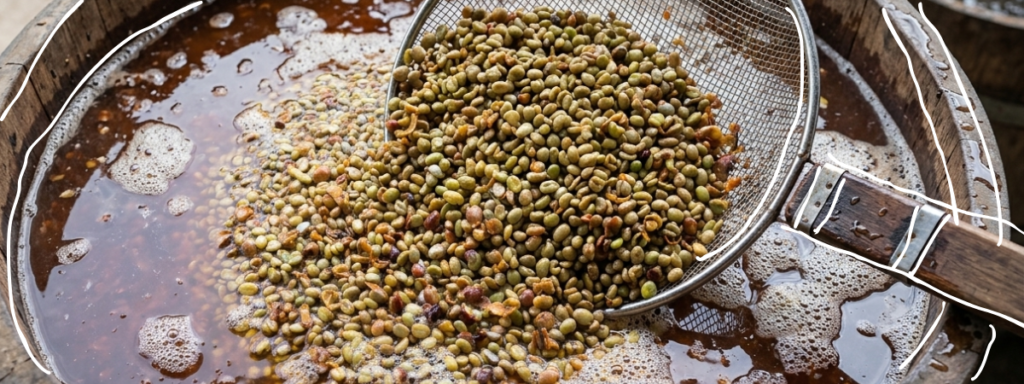
For the consumer, washed Nuevo Oriente is the most approachable entry point into Guatemalan specialty coffee. It’s predictable in the best sense: you know what you’re getting, and what you’re getting is good.
Why Nuevo Oriente matters for the future of Guatemalan coffee
Guatemala was the first coffee-producing country to establish a denomination of origin system for its eight producing regions. In 2018, coffee production was named an Intangible Heritage of the Guatemalan Nation. The sector employs over 125,000 families.
Within that national story, Nuevo Oriente represents something specific: what happens when smallholders without legacy or reputation decide to compete on quality. The region didn’t inherit prestige — it built it, cup by cup, competition by competition.
With average rainfall of 72–80 inches per year, temperatures ranging from 64–77°F and soil fed by volcanoes, Nuevo Oriente appears poised to become a strong coffee-producing region. “Poised to become” undersells where things already are. The cooperatives exist, the quality infrastructure is in place, and international buyers have already signed multi-year contracts.
What Nuevo Oriente needs now is visibility. And that starts with people knowing it exists.
Quick facts — Nuevo Oriente Coffee Region
| Departments | Chiquimula, Jalapa, Jutiapa, Zacapa |
| Elevation | 1,300 – 1,700 masl (4,300 – 5,500 ft) |
| Harvest season | December – March |
| Main process | Washed (natural expanding) |
| Key varieties | Bourbon, Catuai, Caturra, Pache |
| Cup profile | Full body · dark chocolate · caramel · moderate acidity |
| Best brewing method | French press, drip, espresso |
| Notable producers | APOLO Cooperative (Olopa, Chiquimula) · ADISQUE Co-op |
Final thoughts — the origin that earns its place quietly
There’s a version of specialty coffee storytelling that requires drama: extreme altitude, rare varieties, experimental processing, unpronounceable farms. Nuevo Oriente doesn’t offer that.
What it offers instead is something harder to manufacture: consistency earned over decades, quality built by families who had no room for shortcuts, and a cup that delivers exactly what it promises — every time.
The four consecutive Anacafé regional titles from Olopa aren’t a marketing claim. They’re a competition record. And in specialty coffee, that’s the most honest credential a region can have.
If you’ve been drinking Antigua and Huehuetenango and want to understand the full breadth of what Guatemala produces, Nuevo Oriente is the next cup you should make.

Author

Marvin Belloso
Writing about Guatemalan coffee, origin, and brewing culture.
Based in Guatemala, Marvin Belloso explores the regions, brewing methods, and stories that shape the country’s specialty coffee culture.
Currently exploring:
Antigua washed coffees & home brewing methods.
Stay in the loop
Get the latest news, brewing guides, and insights about Guatemala coffee delivered straight to your inbox.
Suscribe to our free newsletter!